IGCSE Chemistry Notes Atomic structure and the Periodic Table

Download PDF

Topic: Structure of an Atom

Click the highlighted blanks to reveal the correct answers.

1 Atomic Structure Basics

1. An atom is the smallest
________________ uncharged
particle that can take part in a chemical change.
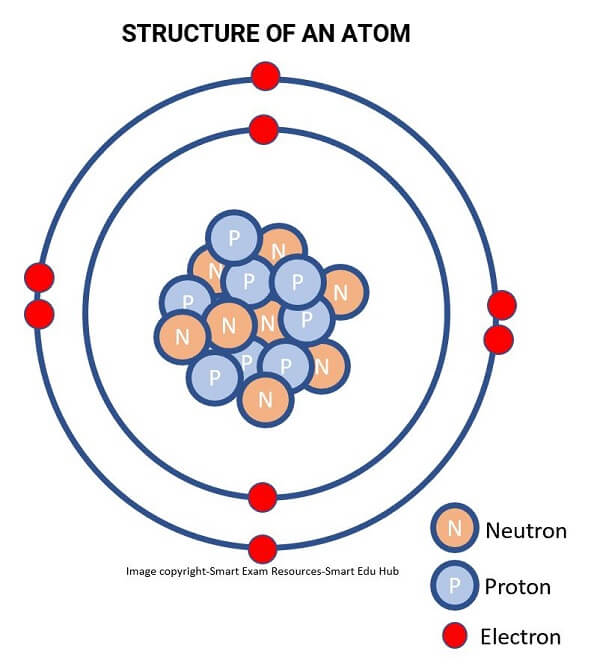
2. An atom contains a centrally located
________________ nucleus
.
3. The nucleus contains positively charged
________________ protons
and neutral
________________ neutrons
.
4. Protons plus neutrons give the
________________ nucleon number
or
________________ mass number
.
5. Electrons revolve around the nucleus in fixed orbits called electron
________________ shells
or energy
________________ levels
.
6. An atom is electrically
________________ neutral
because the number of protons equals the number of electrons.
7. The position of elements in the periodic table is based on their atomic
________________ number
.

2 Relative Mass and Charge

8. A proton has a relative mass of
________________ 1
and a relative charge of
________________ +1
.
9. A neutron has a relative mass of
________________ 1
and has
________________ no charge
.
10. An electron has a relative charge of
________________ -1
.
11. The relative mass of an electron is about
________________ 1/1840
.

3 Atomic Number and Mass Number

12. Proton number is also called the
________________ atomic number
.
13. Proton number means the number of
________________ protons
in the nucleus of an atom.
14. Nucleon number is also called the
________________ mass number
.
15. Nucleon number is the total number of
________________ protons
and
________________ neutrons
in the nucleus.

Members Area

Unlock the complete range of  topic questions, solved past exam papers along with mock exams, detailed and downloadable revision notes, timed quizzes, interactive flipbooks and many more exam preparation resources.

Unlock Complete Resources

Syllabus Objectives

Syllabus Objectives:

Core :

  1. Describe the structure of the atom as a central nucleus containing neutrons and protons surrounded by electrons in shells
  2. State the relative charges and relative masses of a proton, a neutron and an electron
  3. Define proton number/ atomic number as the number of protons in the nucleus of an atom
  4. Define mass number/nucleon number as the total number of protons and neutrons in the nucleus of an atom
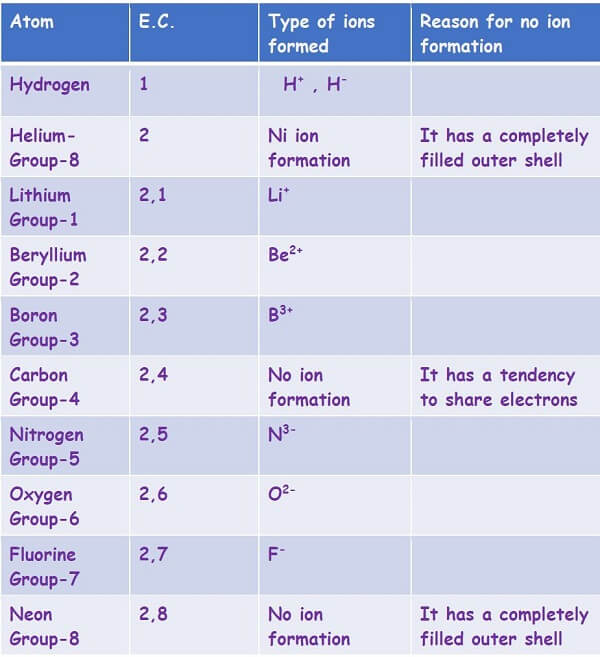
  5. Determine the electronic configuration of elements and their ions with proton number 1 to 20, e.g. 2,8,3
  6. State that:  
  • Group VIII noble gases have a full outer shell
  •  the number of outer shell electrons is equal to the group number in Groups I to VII
  •  the number of occupied electron shells is equal to the period number

Revision Notes

IGCSE Chemistry Notes  Atomic structure and the Periodic Table 

STRUCTURE OF AN ATOM:
igcse-chemistry-notes-structure-of-an-atom 

Structure of an atom 

  • An atom is the smallest uncharged particle that can take part in a chemical change.
  • An atom contains a centrally located nucleus. 
  • The nucleus contains positively charged protons and neutral neutrons.[Protons + neutrons= nucleon number or mass number] 
  • The electrons revolve around the nucleus in fixed orbits called electron shells or energy levels.  
  • An atom is electrically neutral as the number of protons (+vely charged) are equal to the number of electrons (-vely charged). 
  • Position of elements in the periodic table is based on their atomic number. 

igcse-chemistry-notes--charge-and-mass-of-protons-neutrons-electrons 

Define: 

  • Proton number ( Atomic number): It is the number of protons in the nucleus of an atom. 
  • Nucleon number ( Mass number): It is the total number of protons and neutrons in the nucleus of an atom. 

igcse-chemistry-notes-bond-formation-inert-gases


The above video is a preview of the actual revision notes available as a part of the paid membership. All learning resources in the form of pdfs that are available on the website are 100% printable and downloadable.
Next Previous